
Artificial Intelligence is being incorporated into almost every corner of the beauty industry, from foundation matching and real-time consultations to generative marketing and supply chain forecasting and also effecting our LifeStyle in better way..
A McKinsey analysis found beauty players that used AI in personalization and media campaigns saw conversion lifts as high as 40% and marketing-productivity boosts of up to 20%. But as Vogue reported, the beauty industry still deals with issues of trust and inclusivity as algorithms continue to be trained in “the language of seeing everything being skinny,” rather than in how it should understand the gradient of human skin and identity.
For big beauty brands, AI is both a growth engine and a creative backbone. According to a Glossy article, Estée Lauder suffered a loss in market value thanks to soft travel retail sales and has been rebuilding through the hiring of enterprise AI. Its collaboration with Microsoft enables a digital operating platform that supports marketing, supply chain forecasting and product innovation.



Glossy added that the system’s generative models are currently being used to generate ad copy, visual content and internal creative assets, reducing the production timelines by nearly 50%. There are some success stories, though: Estée Lauder says AI-driven media optimization led to a 31% lift in advertising ROI.
Downstream at retail, Ulta Beauty employs machine learning to drive its loyalty and personalization engines, Mid Breaker wrote. The retailer’s platform combines with shopper profiles, purchase histories and store behavior to push personalized offers. With the system, Ulta enjoys a 95% repurchase rate for returning customers and improved labor efficiency with automated signaling and forecasting of inventory.
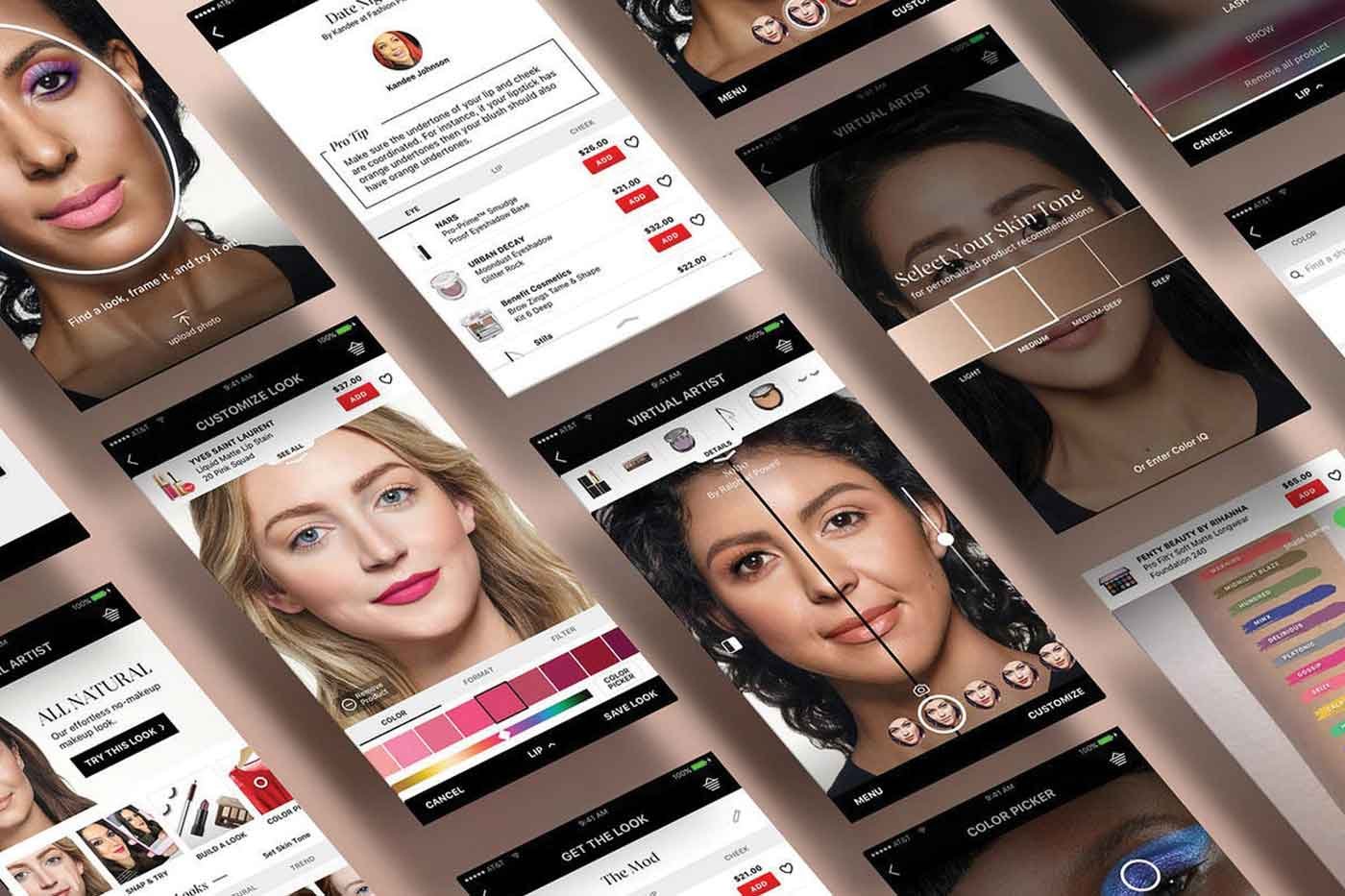
Mid Breaker also noted that L’Oréal is integrating AI to fuel both virtual diagnostics and personalization engines as part of what CEO Nicolas Hieronimus referred to as “a revolution in augmented beauty.” Today, the company’s AI tools ingest millions of customer photos* to deliver shade and skincare recommendations in real time.


In a separate study by Mid Breaker’s, 70 percent of Generation Z shoppers are swayed by personalization. This underscores the increasing role of AI in shaping consumer expectations.
Businesses of Fashion reported that L’Oreal and Perfect Corp. had come to see the technology used by Se for more than just AI buying, so these two companies both operated “agentic AI.” This is a system that executes tasks with its own intelligence independently of people. L’ Oréal’s AI platform now processes millions of real-time skin analyses each month, connecting diagnostics information directly to make product selections.
Perfect Corp uses generative AI on customer websites to quickly produce new looks for clients from their selfie files. Madison Reed employs AI to monitor pigment uniformity during production and automatically adjust colour formulas, ensuring top quality all the time.
Small Brands and Consumer Readiness
The influence of AI is also felt beyond the halls of global corporations. A.I.-powered assistants and shade-matching tools are helping fledgling beauty startups scale their businesses, according to the U.S. Chamber of Commerce. One company noted that nearly 75 percent of its orders are now from virtual try-on and consultation features. These inexpensive tools give smaller brands a competitive edge over enterprise players without requiring mammoth data teams or intricate infrastructure.
For smaller beauty brands such as Beekman 1802, AI tools enable them to produce more personalized education content and foster deeper community engagement, the company told Mid Breaker.


Attitudes about AI in beauty among consumers are changing, too. According to Vogue, the charge of inclusivity is still an issue here, with many algorithms struggling to recognize all of the world’s skintones. Brands are focusing on transparent data governance and fairness in model training to maintain consumer trust, the publication said.
Brand leaders agree that AI has been poorly deployed across the value chain, according to Vogue. Some turn to it for creative inspiration or forecasting; others are experimenting with virtual advisers that can learn from feedback and continuously improve their recommendations. The next era for beauty will be about creating connected systems that tie consumer data, product R&D, and supply chain forecasting to create a continuous loop of learning, the publication said.