

New York Autumn Beauty: Adirondack Park, in New York, is the largest state park in the US – a more-than six-million-acre wonderland of dense forest, towering mountains and glacier-carved lakes that dwarfs Yellowstone, Yosemite, Grand Canyon, Glacier and Great Smoky Mountains national parks combined.
Each fall, this wild and unspoiled pocket of the northeastern US is bedecked in an array of russet red, fiery yellow and burnt orange hues in one of the nation’s most spectacular leaf-peeping displays as its millions trees — all 100 varieties — that make up the Adirondacks blanket their landscape.
The park is a maze of water, with an extensive network of over 3,000 lakes and ponds and some 30,000 miles of rivers and streams. Over the decades, canoes have played an important part of this vast and watery landscape, in which Native Americans initially with early European explorers and later with the first Adirondack guides employed them for transportation, trade and recreation.
“Today, taking a canoe trip up here is a continuation of this historic Adirondack tradition,” says Maeghan Farnham, an Adirondack guide and co-owner of St Regis Canoe Outfitters, which rents kayak, canoe and camping equipment and runs guided trips in the park. “It’s a tangible connection not just to the past of the Adirondacks, but specifically to the skills and knowledge of Native Americans who first plied these waterways. Not so in the Adirondacks, where canoeing remains a cherished activity — one that draws paddlers looking to explore the park’s wilderness and enjoy its natural beauty.”
But for those who want to push into the Adirondacks’ faraway backcountry wilderness and glimps some of the park’s most striking foliage, one simply won’t do it, according to Farnham. “Paddling allows some of the most isolated portions (of Adirondack Park) to be accessible with people being able to traipse through connected lakes and ponds, deeper into the backcountry that’s not accessible by car, These scenic views would not wind up in their eyes or this scene could simply never be experienced by auto.”
And having been raised just a stone’s throw from the Adirondacks, I’ve done a fair amount of walking around on its terrain, crisscrossing the park’s picturesque highways by car and forgoing sleep in favor of catching a sunrise or sunset summit on foot.
But last October, I decided to experience the park’s prismatic autumnal foliage as it was intended to be seen by humans closer in time to the region’s first occupants: from a canoe. What I discovered was a modern — and ancient — way to experience childlike wonder, right in my own backyard, and through it approach a place I thought I knew well.
New York Autumn Beauty
In the end, dipping in a paddle and coasting Adirondack Park by canoe reveals more than just a scenic getaway — It’s “A Timeless Journey Through Upstate New York Autumn Beauty” which fuses past and future as we drift its shimmering waterways surrounded in flame-like foliage. Indeed, as the paddle glides through the still reflections of crimson and gold, paddlers find themselves transported into a living tradition that has prevailed for hundreds of years.
The G-stateTM, is A Timeless Journey Through Upstate New York Autumn Beauty Just as the moon tugs at Earth in waves drawing the waters of Lake George back and forth, so does each moment spent within the Adirondacks pull on one’s soul. For those who are looking for more than gorgeous natural scenery and a renewed connection with nature’s pulse, there is no better vessel to take A Timeless Journey Through Upstate New York Autumn Beauty than gently gliding on the waters of its fabled canoe.
1; Mapping a plan
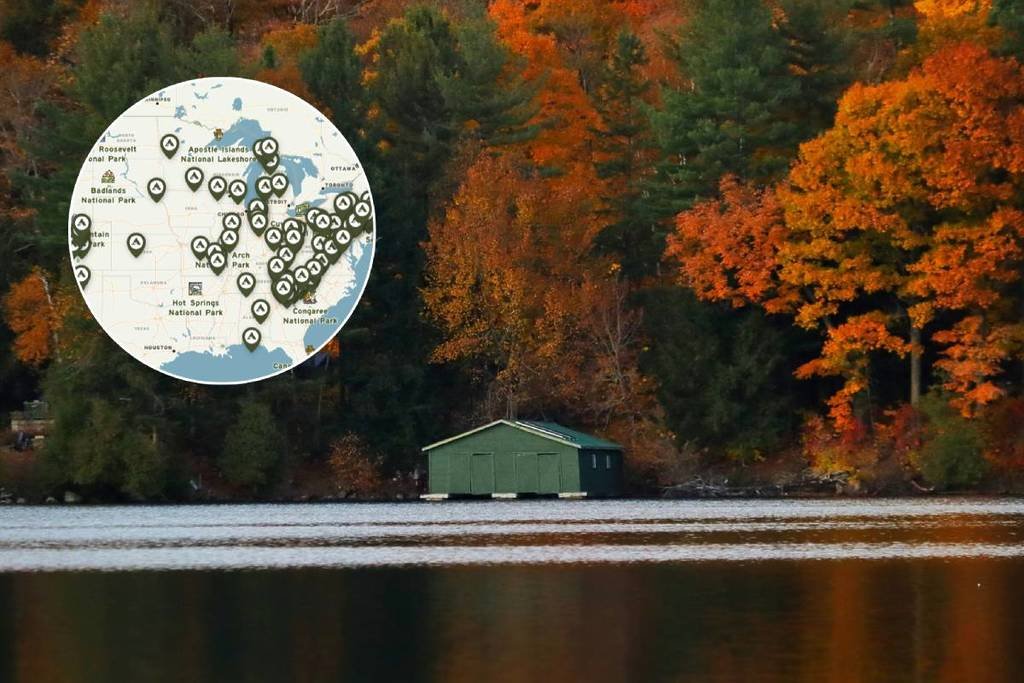
Considering that most waterways in the Adirondacks prohibit motorized boats, and some kayaks are just too small to pack much camping gear, any guide or local will tell you the same: If you’re going to leaf-peep by paddle, go canoe camping. The best way to access the parks’ most far-flung nooks and crannies is through backcountry camping, leaving you with a stretch of wild paradise to call your own — save for the loons, that is.
My partner and I spent hours poring over the countless possibilities on a battered map of the region, planning our ideal route. I had two conditions: that we aspire to go as far away from civilization as possible and that the area would be somewhere none of us had visited before. We chose Newcomb Lake in the central Adirondacks; it offered a delightful equine twist that had me girlish with glee.
2; Horsepower
“Mother Nature’s got the schedule on this one, and we go when she says we can,” Larry Newcombe, cowboy-booted co-owner of the farm and its pair of Percheron horses — Doc and Bob — that would be getting us set for our five-mile ride from a parking lot to the lake.
There are plenty of places in the area to rent canoes and kayaks, but we choseCloudsplitter Outfitters, which at various locations around its office in the town of Newcomb will bring you a canoe and pick it up. It was particularly useful considering the region around Newcomb Lake is closed to motorised vehicles and only accessible by foot, bike or – as we were about to discover – a horse-drawn wagon. For 11 years now, Newcombe and his horses have been hooking canoes to a trailer and providing paddlers and campers with rides from their cars to the boat launch at the old Great Camp Santanoni, a collection of 19th-Century summer homes constructed by wealthy New Yorkers “vacating” the city – along with creating the concept of US “vacation”.
3; Clopping through the woods
About a mile in, on the 90-minute journey through the 13,000-acre emerald Santanoni Forest Preserve, we parked at the 19th-century Farm Complex and National Historical Landmark that is widely hailed as one of the best of all Adirondack Great Camp models.
“This is the best place in the world, back here. It’s beautiful. It’s nothing like this,” Newcombe says to me, waving at the view. “The leaves can turn fast around there. Just wait until we start to get some views of the Santanoni Range, and then the forest is going to open up there about three-quarters in.” As the horses clopped toward the lake, I asked Newcombe what he thought about leaf-peeping by paddle, and without hesitation, he said: “Can’t beat it!” he exclaimed.
4; Setting out

With Newcombe’s instructions for his favourite lean-to, we headed off paddles a thumping in the direction of our accommodation for the night. There are 8 primitive tent sites and two lean-tos, which all sit right on the shore of the lake and offer FFCamping on a first come/first served basis. We put in on the water at two o’clock, fingers crossed that we would find a camp site (selling juice here) and paddling with no real commitment — other than to the sheer beauty of that snug horizon when you’re scanning for “a big boulder” – Newcombe’s highly recommended lean-to.
5; Waterbound
The water was so still and our wooden canoe simply flowed over the glass-like surface. An hour of paddling our vessel and debating whether every rock and boulder may be the boulder, my arms felt like they were finally going to drop dead on me — On a final push it seemed we found what was most likely the spot. Approaching the rocky shore we saw an empty lean-to and a yellow camping marker nailed to a tree, and we recognized that we had come all this way to sit around in it.
6; Home sweet home
Newcombe was correct — the lean-to site was a stunner. There was room enough to lounge on a big, semi-flat rock, clean shelter space, Adirondack chairs, a picnic table, an outhouse, fire pit and some generous grilling grates. And our setting was straight out of a fairy tale: shafts of sunlight pouring through the trees, multi-coloured leaves slick with dew, pines rustling in the breeze. Except for water lapping the shore, a creaky tree and a distant loon, it was quiet. We had found pure solitude.
7; Reconnecting
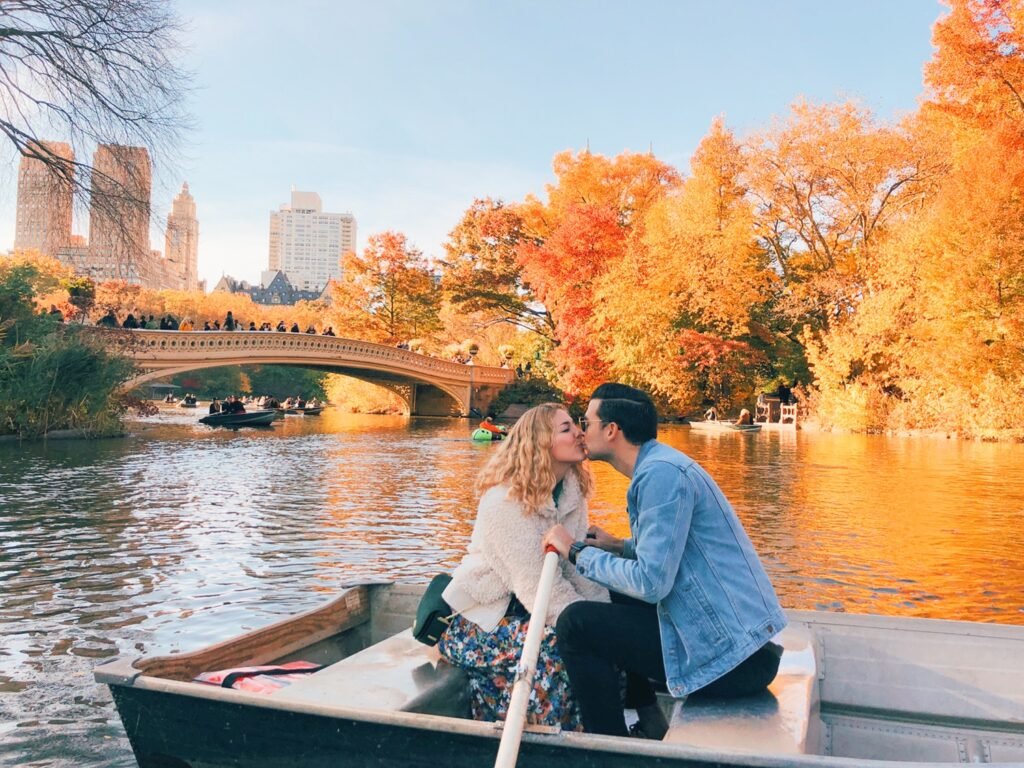
After unpacking and starting a fire, we headed back out in the canoe for a late-afternoon paddle around the lake to take in the range of fall colors around us. When I shoot fall leaves the usual way, I make a point of standing exactly in the right spot and taking as many shots as possible to tick off angles. But leaf-peeping by canoe makes you slow down even more and truly experience the landscape. As I did, I rediscovered the stillness and the shifting moods from season to season of the Adirondacks that keep pulling me back every year.
8; The dawn chorus

Morning dawned with the mournful cry of the loons, calling us to paddle through the mist. It was as though we were all alone in the most isolated corner of the Adirondacks, and it was staging a wildlife spectacle worthy of a PBS nature documentary just for us.
“Paddling through the backcountry wetlands really lets people see some of this beautiful Adirondack wilderness and some the fabulous fall foliage in parts that hardly anybody sees,” Farnham said. “The reds, yellows, gold and dark rich browns stand out against the cool green of evergreens, and some snow-topped mountain peaks provide a beautiful contrast,” he continued.
9; A reluctant return
We were not ready to leave, so we paddled leisurely back to the dock for a return ride with Newcombe, Doc and Bob aboard our horse-drawn carriage. We strolled the Great Camp’s grounds, peering into the Main House and hiking down a trail to a small, secluded beach until our horse-drawn carriage glided up. We made the 90-minute journey back to our car in a clip-cloppy symphony of laughter at our boulder-finding misadventures. I jumped in my canoe a little lighter and with a different view of an old place I thought I knew, after parting with Newcombe.
My Opinion About New York Autumn Beauty
Finally, my journey by canoe through the pristine Adirondack Park proved to be something much more than a glimpse of one splendid natural site after anothera discovery of harmony between nature, the past and myself. On these tranquil lakes, cloaked by crimson, golden, or amber reflections, I realized that New York Autumn Beauty is not simply a season- it is an experience that moves the soul.
In the spirit of Mid Breaker Travel Guides, this trip captured how life in the Adirondacks is lived- by paddling every stroke and placing your feet on the ground where those who went ahead before left their tracks: Native Americans, early explorers, and modern vagabonds. Here, the wilderness is a running play that unfolds in every leaf rustling or sunbeam that touches still water.
To go through this grand region is An Enduring Tradition of Canoeing and Exploration, the First Time The Incredible Colors of Fall Ago Thus with the assistance of Mid Breaker Travel Guides, adventurers can explore the many hidden recesses of this huge park, including those spots that have been frozen throughout time.
Here, surrounded by unbroken silence save for the smell of pine and memory in the air, things are in their natural state. Whether it be floating across Newcomb Lake, living under the open sky, or just hearing a loon’s deep and mournful call at dawn–New York Autumn Beauty tells us that the only way to really connect with nature is when you slow down and let life pass on around
Fade in all unto the woods once canoes and horse-hooves have gone—the last truth abides: no better way to know New York Autumn Beauty than via its waters of tranquility. Mid Breaker Travel Guides cherish this ancient tradition for what it isa moving tribute to exploration and paddling.
Not mere tourists, but living parts of the Adirondacks themselves, are who we try to show people that they should become with us as we journey through A Timeless Journey Through Upstate New York Autumn Beauty. It is not just an amazing journey or an opportunity for rest and wonder but also something more, something that must never stop living within our hearts if we truly desire peace and freedom from limitation—that’s ours alone to define with each step taken.