
OpenAI is still at the heart of the artificial intelligence world, thanks to a flurry of recent deals that set off waves through the industry. The end of September saw the company sign a data center deal with Nvidia, partner with Oracle and SoftBank to deploy five data centers under the Stargate project, and upgrade its contract with Databricks in a multi-year agreement.
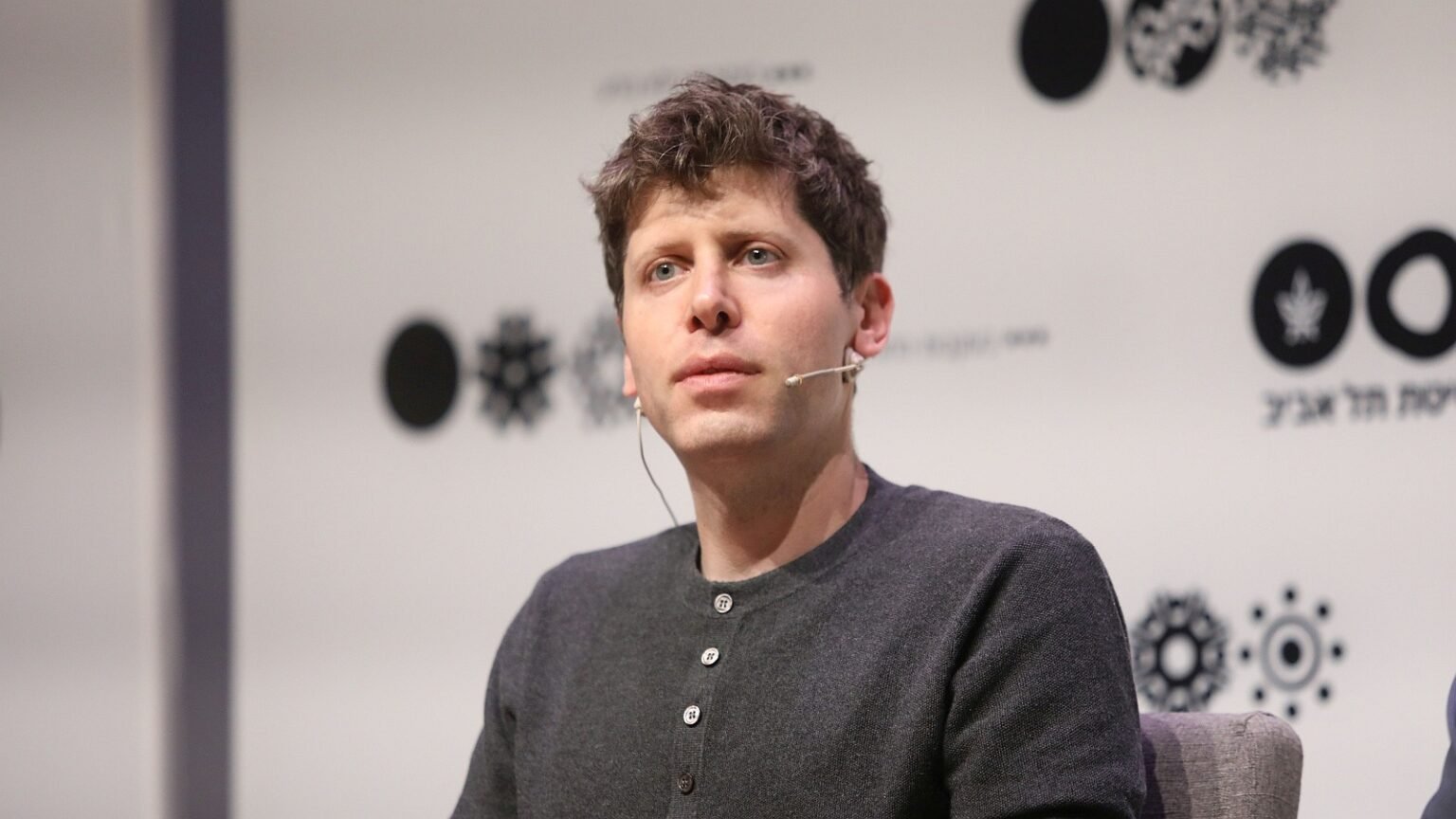
October is set to be an even busier month for the AI startup, which just closed a deal that saw current and former employees sell about $6.6 billion worth of shares to investors like SoftBank and T. Rowe Price. With this deal in the books, OpenAI is now valued at $500 billion, up from $300 billion, according to reports, and is purported to be the highest-valued private company in the world. It also unveiled a partnership with Broadcom to build custom AI accelerators, and CEO Sam Altman has stated that there are more partnerships in the works.
All of these moves follow OpenAI’s focus on scaling the business and expanding beyond ChatGPT, with additional deals and product launches already packing in to the first week of October. That said, the short-term benefits of rapid business growth may be tempered over time by worries about just what this means for the startup’s nonprofit ethos, and also whether that kind of growth is sustainable — both for OpenAI and broader AI industry. October brought a series of announcements from OpenAI that signaled the startup’s expansion into more consumer-accessible tech arenas, as it strengthened its AI endeavors.


Introducing Sora 2 and the Sora App
OpenAI released Sora 2, which is a sequel of the original Sora model. This way, Sora 2 can produce richer videos without losing to various hallucinations, resulting in more realistic outputs. It can also handle more concrete prompts and generate videos in specific styles such as anime and cinematic.
The model was built for use with OpenAI’s new iOS app, Sora, which has swiftly become one of the top apps on Apple’s App Store. One of the app’s more popular features is that it lets users make their own AI-generated vids — videos featuring themselves and friends as the tribal characters, thus further blurring the lines between software-based artificial intelligence and social media.
Acquiring Roi
Further stepping into the consumer world, OpenAI bought Roi, a startup most famous for its AI-powered finance app. The app is designed to be a centralized place to track and manage a user’s financial activity across stocks, NFTs, crypto and other assets. OpenAI looks like it’s also taking on a more tailored form of AI — something that falls in line with both Roi’s experience and the grander ambition of OpenAI’s CEO.
“We started Roi to democratize investing through the most personalized financial experience possible,” Roi co-founder and CEO Sujith Vishwajith wrote in an X post.“Along the way we discovered personalization isn’t simply a key tenant of the future of finance. It’s the future of software.”
Partnering With AMD
OpenAI and the semiconductor company AMD forged a partnership to supply the latter’s chips for OpenAI’s AI farm, capable of generating six gigawatts’ worth of computations. OpenAI will use AMD’s Instinct MI450 GPU and has the option to purchase as many as 160 million shares in AMD’s common stock, according to the terms.
The deal is seen as a win-win for both companies. On the one hand, OpenAI locks in the AI chips and computing power it needs to keep scaling its infrastructure in pursuit of more powerful AI. Meanwhile, AMD’s stock soared 38 percent following the announcement, and it helped put it back on track to compete in an AI chip race that has been largely led by Nvidia.
Partnering with Broadcom
OpenAI has also formed an alliance with other chipmaker, Broadcom, to co-design custom AI accelerators and systems that will be able to provide up to 10 gigawatts of computation. By building its own chips, OpenAI says it can bake insights gathered from existing AI models into the hardware, which will run across the startup’s compute infrastructure and partner data centers via Broadcom’s Ethernet and connectivity systems to scale globally.
This new partnership is the latest effort from an existing relationship between both companies, to go along with OpenAI’s previous agreements with Nvidia and Oracle. There was no official confirmation of the financial terms, but a person familiar with the transaction who spoke on condition of anonymity to discuss it said that it was valued at several billion dollars. Shares of Broadcom were up also about 10 percent after the announcement — something that has been seen with several other companies collaborating with OpenAI in recent times.

ChatGPT Apps and the Apps SDK
ChatGPT is no longer OpenAI’s only priority, but it remains a cornerstone of the company’s plans. OpenAI revealed today that ChatGPT users will have direct access to apps from within the ChatGPT interface, ranging from Spotify and Zillow to Coursera. They are then able to speak directly to these apps and have general commands and questions answered by a bot, which enhances the overall experience.
The announcement also confirmed the launch of OpenAI’s Apps SDK (software development kit). As an open-source set of tools and libraries, Apps SDK provides the opportunity for developers to create the underlying logic and interface components of applications written in any language that can communicate with any other platform that follows standards established by Apps SDK.
Changing the Focus from Nonprofit
OpenAI, as a nonprofit, has promised to “solve humanity’s hardest problems.” And while ChatGPT can — at least in theory — be a productivity booster and decision-making aid, there is less substance behind what noble purpose the company’s Sora lineup might serve. OpenAI researchers have even voiced their concerns and misgivings about Sora 2, particularly given some of the well-known problems that plague social media — deepfakes, endless scrolling. In fact, more than a month ago Altman admitted that Sora is indeed just a cash grab.
“Mostly we need the gardening capital to build AI that can do science, and we really are certainly aiming for AGI with just about all of our research,” he wrote in a forum on X. “Reality is nuanced where optimal growth paths for a company are concerned.”
It’s reminiscent of the time OpenAI first tried to reconsider whether it should be a nonprofit or for-profit organization, an effort that drew sharp criticism at the time. And while early stage, the startup is still technically a nonprofit, and chasing actual artificial general intelligence is an expensive effort and Altman appears willing to potentially throw away OpenAI’s higher mission for profit at all costs right now.


Creating Potential Copyright Conflicts
The Sora mobile app rollout has already had OpenAI under fire from the community regarding the growing amount of deepfakes on the platform. But an even larger question is whether some of the material that’s fed into AI-generated videos may itself be copyrighted, and this could in turn open the floodgates for AI copyright lawsuits..
OpenAI has made efforts to avoid a long-standing issue that has plagued platforms like TikTok and Facebook by giving copyright holders rights when their characters are used on Sora. The change in policy is designed to minimize any friction with individuals and companies, but there’s a possibility that continuing sensitivities about copyright lead to legal disputes farther down the line.
Chasing Too Many Business Opportunities
OpenAI’s business transactions and product rollouts are the company selling off more of our data to us, in an effort to create further revenue streams that can feed AI’s growing need for food. By 2030, the computing needs of AI could increase to 100 gigawatts in the U.S., and to as much as 200 gigawatts globally, according to a Bain & Company report.
Which will require an even more robust infrastructure of AI chips, data centers and the like to power increasingly sophisticated AI models — forcing Altman to continue jetting around the world building deals in Asia and Middle Eastern.
But the pressure to diversify OpenAI’s investments and revenue streams might be diluting the company’s focus on critical projects. Consider, for example, OpenAI’s mystery gadget. Designer Jony Ive and Altman have agonized over some of the most fundamental questions about how the wristband might communicate with users in anything but cryptic morse code – and if they’re being distracted by other projects, they certainly won’t get answered.
Merely pouring more money into AI doesn’t insure success, either. After all, OpenAI’s GPT-5 model was supposed to mark the next big leap toward AGI, only to fall on its face and piss off long-time die-hards because of a messy deployment. “Instead, a wave of new products and partners is pressuring OpenAI to start raking in enormous profits, and keep up with the burning pace of demand for AI — an inhuman standard perhaps no AI company could meet.”


How OpenAI Is Contributing to AI
More broadly, questions about the sustainability of OpenAI’s business model have fueled broader concerns about the financial health of the AI industry. OpenAI’s deals are part of a larger pattern of deal-making in which the biggest AI players cut deals that simply involve them shuffling money and resources among themselves. Industry expansion, in that case, would be the result of a few tech titans’ plans rather than general company or consumer enthusiasm.
The worry is that this is evidence of an AI bubble, which will have a setback as, impact like the dotcom bubble. A.I.-related capital spending has added more to GDP growth than the sum total of consumer spending, and among all S&P 500 companies that mention A.I., only five are moonshine-free (in lending money, and Dave’s friend’s accounting-so-called). So, it would be rational for the U.S. economy if an A.I. bubble did pop.
Of course, OpenAI is continuing to prosper in an age of rising AI expectations. But if the money stops flowing or it turns out that feeding AI’s massive appetite for energy is untenable, this kind of industry collapse could create reverberations across sectors and through time, long after tech giants like OpenAI are gone.