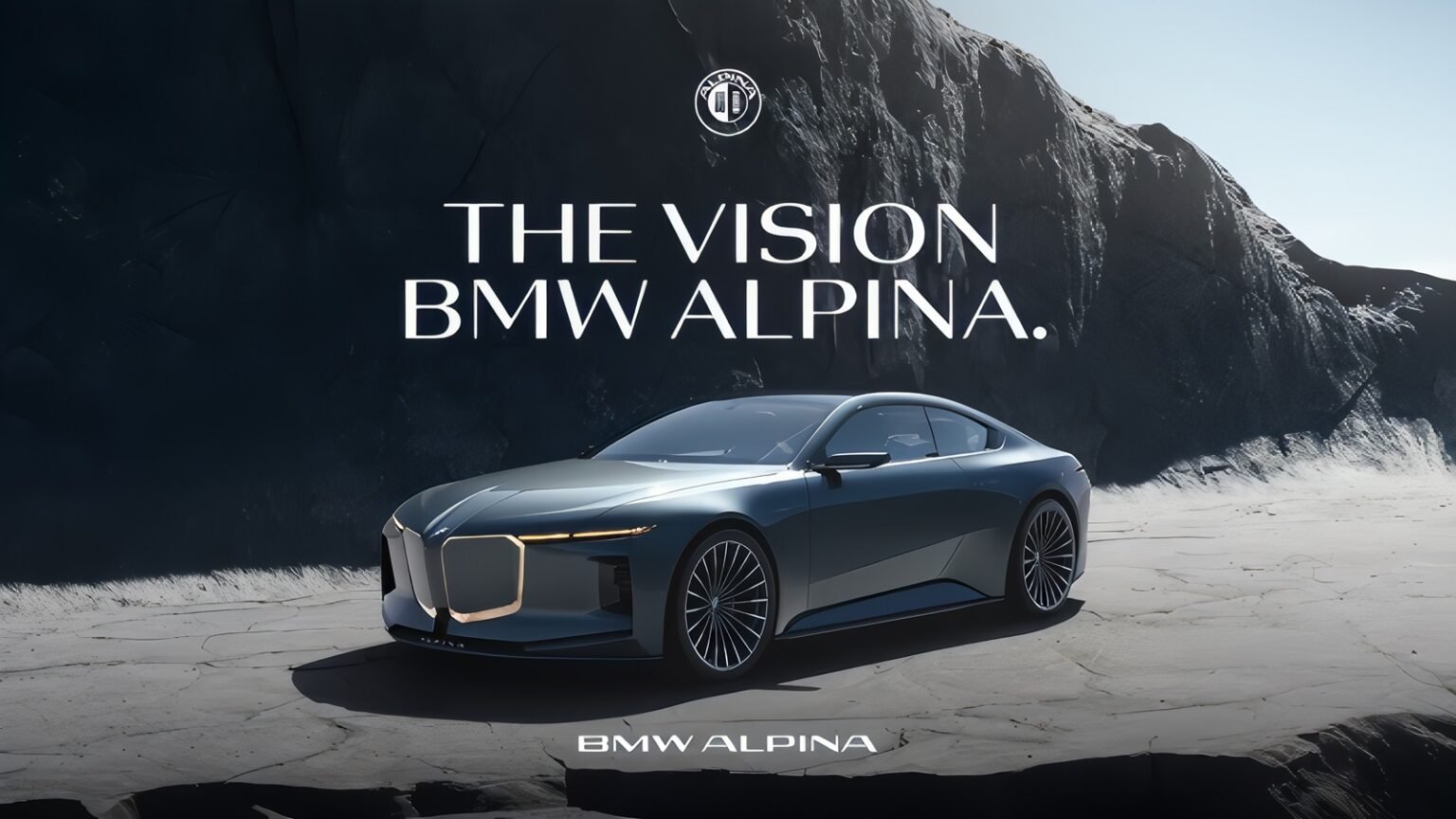

Article Highlights / Key Points
- The Vision BMW Alpina is a one-of-a-kind design study unveiled at the 2026 Concorso d’Eleganza Villa d’Este, marking a significant new chapter for the brand under full BMW Group ownership.
- BMW Alpina now officially sits between BMW’s top-tier models and Rolls-Royce, targeting the ultra-luxury grand touring segment with V8 power and no hybrid system at launch.
- The concept stretches 5,200 mm in length, draws design inspiration from the classic E24 6 Series, and introduces a new “speed feature line” running the full length of the body.
- The cabin is a masterclass in handcrafted luxury, featuring full-grain leather, crystal glassware, watchmaking-inspired metal detailing, and a completely bespoke digital interface.
- The first production BMW Alpina model, inspired by the BMW 7 Series, is confirmed for 2027 and will be powered by an unrestricted V8 engine without any electrification.
The Moment I Saw It, I Understood the Hype
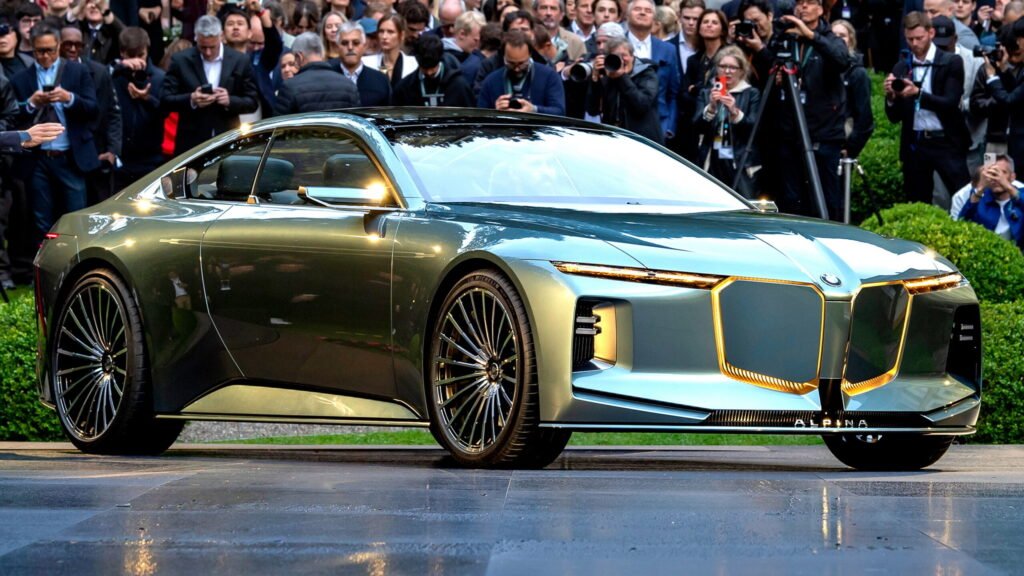
Standing in front of the Vision BMW Alpina at the 2026 Concorso d’Eleganza Villa d’Este on the shores of Lake Como, I had a simple thought: great car design is not dead. Press photos had not done this thing justice. In real life, the concept is a proper stunner. Wide, low, and dripping with quiet confidence, it immediately tells you something important is happening here.
This is not just a show car for the sake of spectacle. The Vision BMW Alpina is a deliberate statement about where one of the most quietly revered car brands in the world is headed. And if you are new to BMW Alpina, now is a very good time to start paying attention.
A Brand Reborn Under New Ownership
To understand why this reveal matters so much, you need to know what happened to BMW Alpina over the past couple of years. The brand, founded in 1965 in the small Bavarian town of Buchloe by the late Burkard Bovensiepen, spent decades producing extraordinarily refined, high-performance variants of BMW road cars. They were rare, obsessively engineered, and beloved by those lucky enough to own one.
In January 2026, BMW Alpina became an exclusive brand fully within the BMW Group. This is not just a change of ownership on paper. It is a complete repositioning. As Oliver Viellechner, the new head of BMW Alpina, put it: the brand now fills a genuine gap in the BMW Group portfolio, sitting clearly above the most expensive BMW models and just below Rolls-Royce territory. That is a significant space, and the Vision BMW Alpina is the brand’s opening argument for why it deserves to occupy it.
The Design: When a Shark Nose Meets Modern Ambition
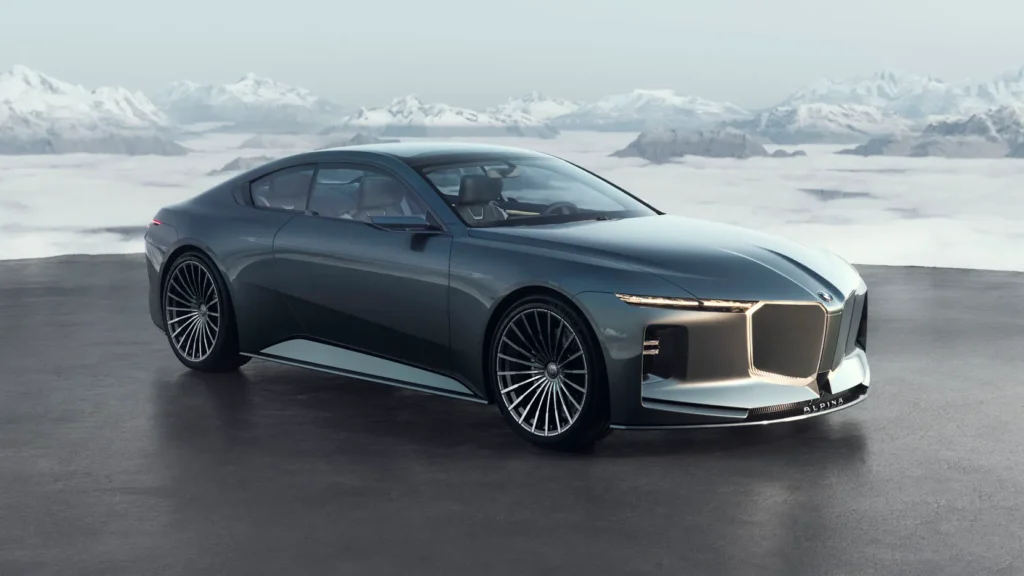
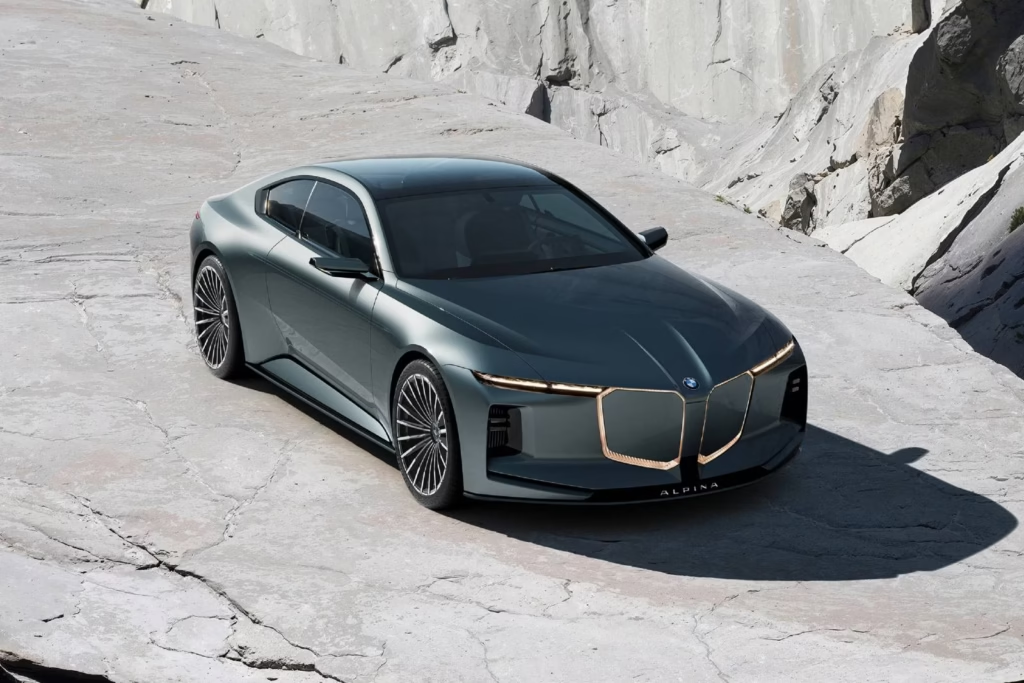
The first thing you notice is the sheer size of this car. At 5,200 mm long, it is only 16 cm shorter than a current BMW 7 Series, and it shares the same underlying architecture. Yet it does not feel like a 7 Series. It feels like something more dramatic, more personal, and more considered.
The front end is built around what BMW Alpina calls a “shark nose,” a design cue that reinterprets BMW’s famous kidney grille as a three-dimensional sculptural form. It leans forward with intent. The reference point here is the E24 BMW 6 Series, the classic coupe that Alpina transformed into the legendary B7 Coupe in the late 1970s. That car had a long bonnet, a wide stance, and the kind of presence that made it look fast even while parked. The Vision BMW Alpina carries that spirit forward with unmistakable purpose.
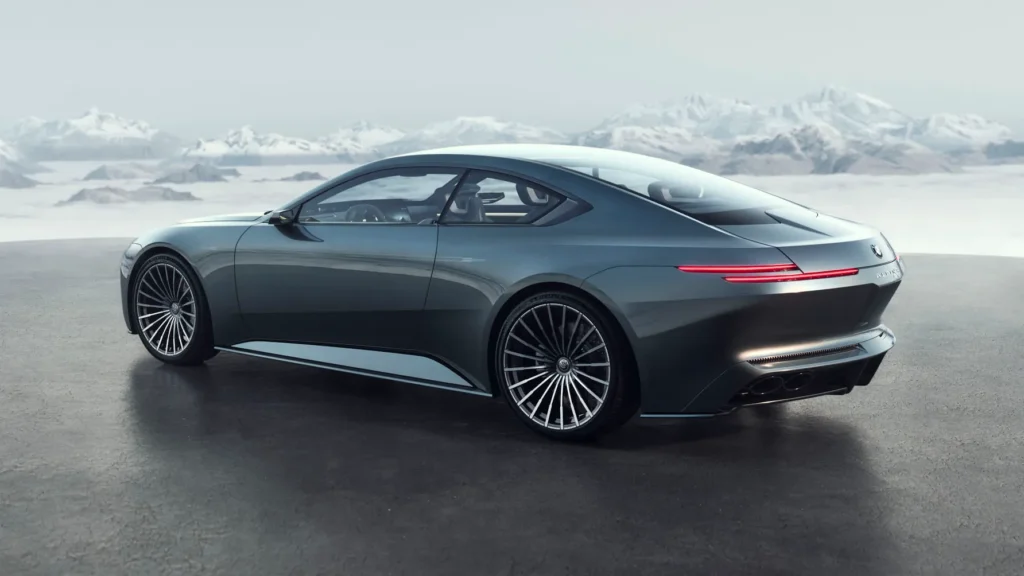
From the shark nose, a single visual line called the “speed feature line” rises from the lower front corners at a six-degree inclination and runs cleanly along the entire side of the car, wrapping around to the rear lights. It is assertive without being aggressive. It suggests motion while remaining completely controlled. This is the visual language of what BMW Alpina calls its defining philosophy: “Speed, not Sport.”
The distinction matters. BMW Alpina is not trying to be an M car. It is chasing something different: serene, effortless speed delivered in supreme comfort. Those two ideas are not in conflict here. They are the entire point.
The deco-lines, a BMW Alpina signature since 1974, have been modernised and painted beneath the clear coat on the side of the body. They are subtle. You have to look for them. That is intentional. The design boss, Maximilian Missoni, described this approach as the “second read” principle: details that reward attention without demanding it. The same philosophy applies to the chrome trim, which appears only on inward-facing perpendicular surfaces and remains invisible until you lean in for a closer look.
The wheels are a highlight all by themselves. The concept rides on 22-inch fronts and 23-inch rears in a 20-spoke design that has been part of the Alpina identity since 1971. They look extraordinary in person. The quad exhaust pipes at the rear and the machined “ALPINA” lettering on the lower front apron complete a picture of a car that knows exactly what it is.
The Philosophy: Comfort Is Speed
Burkard Bovensiepen understood something that most car manufacturers have forgotten: a comfortable driver is a faster driver. This belief is not just a marketing slogan for BMW Alpina. It is an engineering principle that dates back to endurance racing, where Burkard famously added extra padding to the driver’s seat while his rivals were stripping weight out of their cars.
That thinking shapes everything about the Vision BMW Alpina. Every production BMW Alpina will launch in a new “Comfort+” mode that goes beyond BMW’s standard comfort calibration, delivering a more supple and refined character. The traditional Sport and Sport+ modes have been replaced entirely with “Speed” and “Speed+” settings. The naming choice alone tells you everything about the priorities here.
No production BMW Alpina will ever be speed-limited. The Vision concept is powered by a V8 combustion engine, described as rich and sonorous, tuned to produce deep tones at low speeds and a proper voice at high revs. There will be no plug-in hybrid system at launch. This is a deliberate decision by a brand that believes a combustion V8 is the right expression of its values in the ultra-luxury segment, at least for now.
The Interior: A Cabin Built for Real People
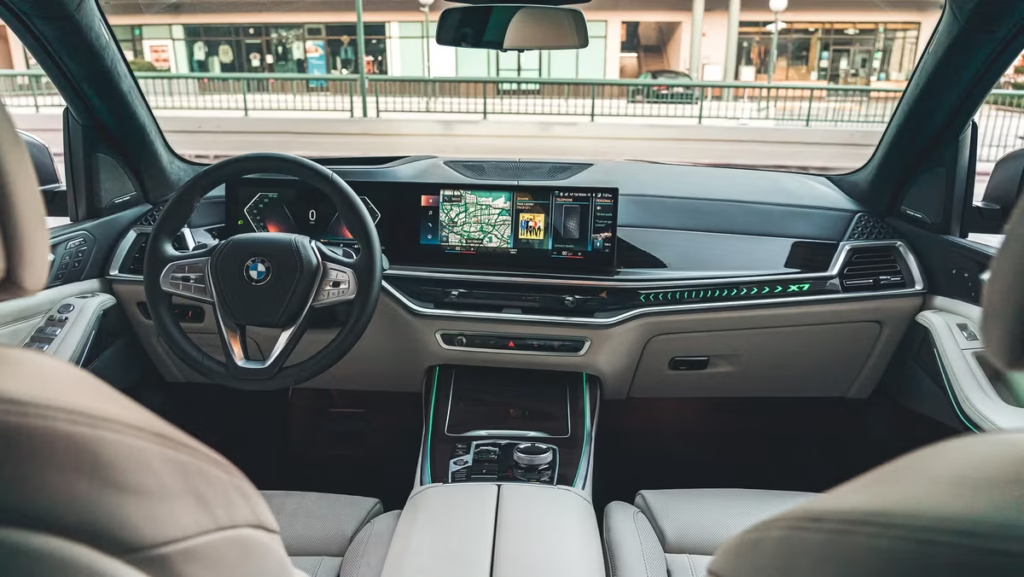
Step inside the Vision BMW Alpina, and the exterior’s confidence continues. The cabin is generous in space, material quality, and in the care with which technology has been integrated. These are not the words of a brochure. Sitting in it, you feel it immediately.
The same six-degree speed feature line that organises the exterior continues inside, dividing the cabin into a darker upper section and a lighter lower section. Full-grain leather sourced from producers across the Alpine region covers the seats and door panels. The stitching draws from the deco-line pattern, a subtle but beautifully considered connection between the exterior and interior design language.
The metal components are finished using a watchmaking-inspired beveling technique that combines satin and polished surfaces. Crystal is reserved specifically for the controls most directly connected to the driving experience: the drive mode selector and key interface points. A bridge stitch in heritage blue and green appears sparingly as a nod to classic Alpina steering wheel craftsmanship.
Behind the rear console, a glass water bottle sits beside a pair of BMW Alpina crystal glasses that rise on a self-deploying mechanism. Each glass is engraved with 20 deco-lines and features a six-degree rim profile. They are held in place by concealed magnets, so they will not topple even when you are flat out on the Autobahn. That kind of attention to practical detail, applied to something as refined as glassware, is exactly the sort of thing that separates a truly premium product from one that merely looks the part.
The digital interface spans the dashboard via BMW Panoramic iDrive, including a passenger screen, with a user interface language crafted specifically for BMW Alpina. The heritage blue and green colours of the brand intensify as the driver moves from Comfort+ to Speed mode. The head-up display background features an exact rendering of the mountain range visible from Buchloe, looking south toward the Alps.
What Comes Next: The 2027 Production Car
The Vision BMW Alpina is not a production car and almost certainly will never be one in this exact form. But it is not just a fantasy either. It is a precise declaration of design intent, a catalog of details that will carry forward into the production vehicles that follow.
The first of those vehicles arrives in 2027. BMW Alpina has confirmed it will be inspired by the BMW 7 Series, and it will be unmistakably BMW Alpina. It will carry the V8 engine without electrification, no speed limiter, and the Comfort+ setup as standard. The cabin is expected to be closely related to what you see in the Vision concept, because the luxury touches and the bespoke digital interface are realistic and production-ready in nature.
BMW is also upscaling select dealerships and manufacturing facilities to support the deep personalisation options that will define the new BMW Alpina. This is a deliberate strategy: the ability to specify a car exactly as you want it is a major revenue driver for brands like Ferrari and Bentley, and BMW Alpina intends to build the same kind of relationship with its customers.
The new boss, Oliver Viellechner, has been clear that BMW Alpina will start where the most expensive BMW stops. That means competing in the same space as the Bentley Continental GT and other ultra-luxury grand tourers, a profitable segment, growing, and home to some of the most passionate buyers in the automotive world.
Why BMW Alpina Still Feels Special
There is something hard to articulate about why BMW Alpina cars have always felt cooler than they have any right to. Maybe it is their rarity. Maybe it is the obsessive engineering. Maybe it is the fact that knowing about them has always felt like a privilege, a brand that rewards the genuinely curious rather than courting casual attention.
Whatever the reason, the Vision BMW Alpina does not dilute that feeling. If anything, it sharpens it. This is a brand that knows exactly what it is and what it is not. It is not a track weapon. It is not trying to win a drag race against an M car. It is something rarer and, in my view, more admirable: a grand tourer built on the belief that speed and comfort are not opposites, that the journey itself is the point, and that the people who understand that deserve a car made specifically for them.
The next chapter of BMW Alpina begins in 2027. Based on what I saw at Villa d’Este, I think it is going to be worth the wait.