
Article Highlights / Key Points
- Sports electric vehicles now rival and often beat traditional supercars in straight-line acceleration thanks to instant torque delivery.
- The Porsche Taycan stands out for combining genuine sports car handling with everyday EV practicality.
- Tesla Roadster promises to be one of the fastest production vehicles ever made, electric or otherwise.
- Rimac Nevera represents the absolute cutting edge of what battery technology can achieve in a road car.
- Owning a sports EV today means getting performance, low running costs, and a genuinely modern driving experience all in one package.
Introduction
There was a time when the idea of a sports electric vehicle felt like a contradiction. Sports cars were supposed to growl, rev, and demand real skill to manage. The thought of replacing all of that with silent electric motors did not sit well with many driving enthusiasts, including me. But after spending time with some of the most exciting sports electric vehicles available today, that skepticism is hard to hold onto.
- Article Highlights / Key Points
- Introduction
- 1. Porsche Taycan: The One That Convinced the Skeptics
- 2. Tesla Model S Plaid: The Performance Benchmark
- 3. Rimac Nevera: The Hypercar Redefining What Is Possible
- 4. Lotus Emira Electric (and the Evija Legacy): British Performance Reimagined
- 5. Tesla Roadster (Next Generation): The One Everyone Is Waiting For
- What Makes Sports Electric Vehicles Different to Drive
- Experts Opinion
The truth is that electricity has not killed the excitement of driving. In many ways, it has intensified it. The instant torque, the seamless acceleration, and the sheer sophistication of modern electric powertrains have created a new kind of performance car experience. One that is different from the past but no less thrilling.
This article walks through five of the best sports electric vehicles you can buy or look forward to right now, based on real performance data, driver impressions, and what makes each one genuinely worth talking about.
1. Porsche Taycan: The One That Convinced the Skeptics
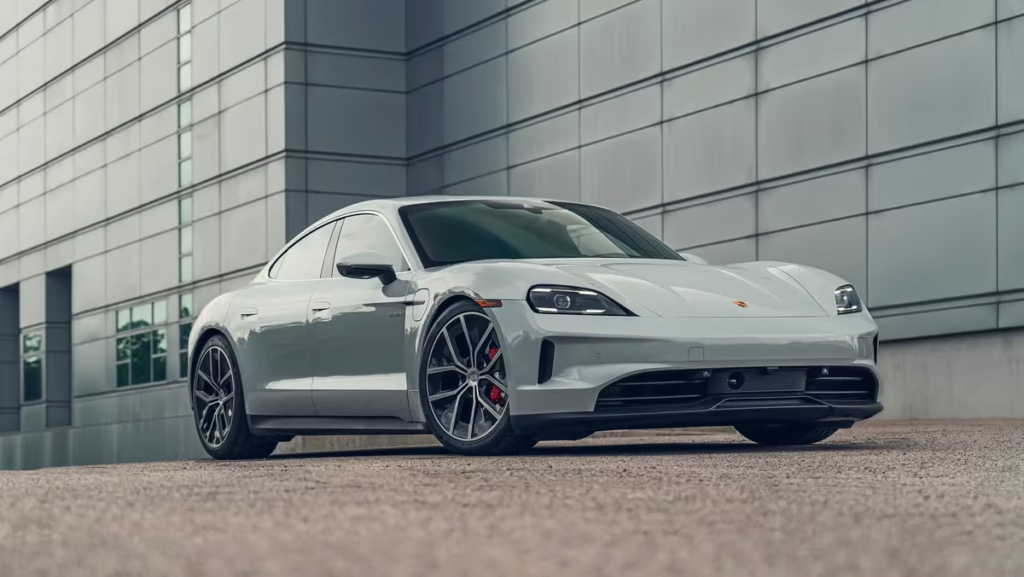
If any sports electric vehicle was responsible for shifting the conversation around performance EVs, it was the Porsche Taycan. Porsche took its time entering the electric market, and the result speaks for itself.
The Taycan Turbo S produces around 750 horsepower in overboost mode, and it covers the zero-to-sixty sprint in under 2.4 seconds. Those are supercar numbers. But what sets the Taycan apart from most sports electric vehicles is not just the straight-line speed. It is how the car handles corners.
Porsche engineered the Taycan with a two-speed rear transmission, which gives it a power delivery character that feels more like a traditional performance car than most of its rivals. There is real depth to the driving experience. You feel the weight management, the chassis tuning, and the precision steering in a way that makes the car rewarding on a winding road, not just on a drag strip.
The Taycan also holds up well on a track, which is something many sports electric vehicles struggle with due to battery heat management. Porsche addressed this with a sophisticated thermal system that allows repeated hard laps without significant performance drop-off.
Range sits at around 250 to 280 miles, depending on the variant, which is honest and usable. This is a sports electric vehicle you can drive hard and also take on a long weekend trip without constant range anxiety.
Key Specifications: Top Speed: 161 mph 0 to 60 mph: 2.4 seconds (Turbo S) Range: Up to 282 miles (EPA estimated) Price: Starting around $90,000.
2. Tesla Model S Plaid: The Performance Benchmark
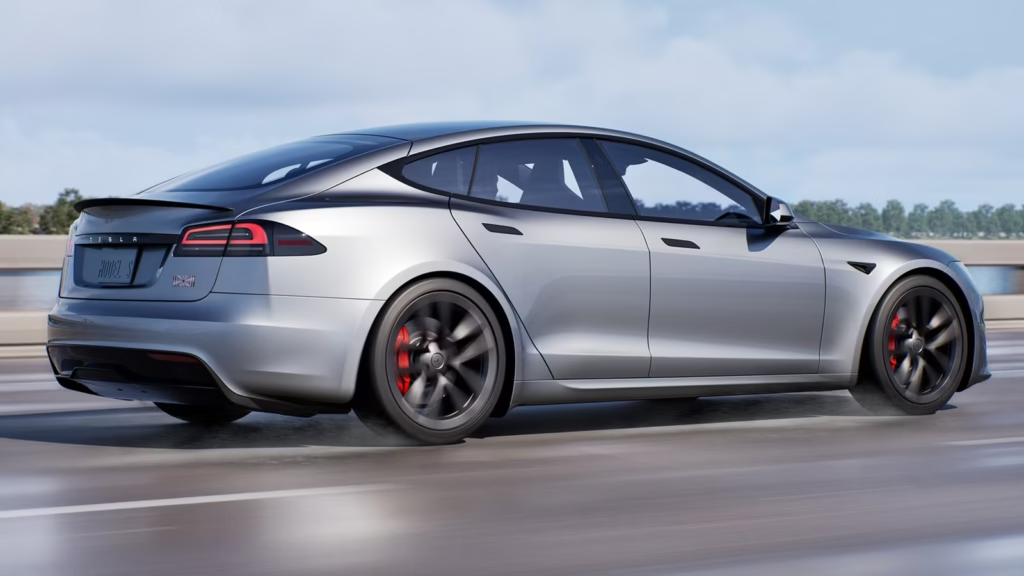
No conversation about sports electric vehicles is complete without the Tesla Model S Plaid. This car changed what people expected from electric performance before most manufacturers had even released a competitive EV sedan.
The Plaid uses a tri-motor setup producing over 1,000 horsepower, and it delivers a zero to sixty time of under 2 seconds in optimal conditions. That figure was once reserved for purpose-built track cars. The Model S Plaid does it in a full-size luxury sedan that also seats five adults comfortably.
What makes the Plaid interesting beyond the raw numbers is how accessible that performance is. You do not need to be a skilled driver to feel fast in this car. You press the accelerator and the experience is immediate, linear, and almost surreal. Passengers in the back seat regularly react with genuine shock the first time they feel it.
The Model S Plaid also benefits from Tesla’s ongoing software updates, which means the car you buy today will often perform better six months from now. That is a genuinely unique approach to owning a sports electric vehicle.
Range on the Plaid is excellent at around 396 miles on a full charge, which is outstanding for a car in this performance category. The Supercharger network also remains one of the most reliable and widespread charging infrastructures available, which takes practical stress out of ownership.
The interior has improved significantly in recent years, though it remains more minimalist than what you get in European alternatives. For buyers who prioritize outright performance per dollar, nothing in this segment touches it.
Key Specifications: Top Speed: 200 mph (with optional track package) 0 to 60 mph: Under 2 seconds Range: Up to 396 miles (EPA estimated) Price: Starting around $89,990.
3. Rimac Nevera: The Hypercar Redefining What Is Possible

If the Porsche Taycan convinced mainstream buyers that sports electric vehicles could be credible performance machines, the Rimac Nevera convinced the engineering world that electricity had no ceiling.
The Nevera is a Croatian-built electric hypercar producing 1,914 horsepower through four individual electric motors, one at each wheel. That torque vectoring system gives the car a level of chassis control that would be mechanically impossible to achieve with a traditional drivetrain. Each wheel can be adjusted independently in milliseconds, allowing the car to place its power exactly where it is needed.
The result is a zero-to-sixty time of 1.85 seconds and a top speed of 258 mph. Those figures place it among the fastest road-legal cars ever built, of any powertrain type.
Driving the Nevera is described by those who have experienced it as something outside the normal frame of reference for what a car feels like. The acceleration is not just fast. It is disorienting in a way that only a handful of cars in history have managed to achieve.
Rimac built only 150 examples, each priced at around two million dollars. This is not a car most people will ever own, but it matters enormously because it proves what sports electric vehicles can achieve when engineering is the only constraint.
The Nevera also carries a range of around 340 miles, which is remarkable given the power output. It demonstrates that performance and usability are not mutually exclusive in the world of electric vehicles.
Key Specifications: Top Speed: 258 mph 0 to 60 mph: 1.85 seconds Range: Up to 340 miles Price: Approximately $2,000,000 (production limited to 150 units)
4. Lotus Emira Electric (and the Evija Legacy): British Performance Reimagined

Lotus has been building lightweight sports cars in England for decades, and the brand’s approach to electric performance has been thoughtful in a way that reflects its engineering roots. The Evija, their flagship electric hypercar, set a clear direction for what Lotus believes sports electric vehicles should feel like.
The Evija produces 2,000 horsepower and achieves a zero-to-sixty time projected at under 3 seconds with a top speed exceeding 200 mph. But what defines it from a Lotus perspective is weight management. The Evija weighs around 1,680 kilograms, which is remarkably light for a car carrying a large battery pack. That lightness translates into a handling character that feels genuinely connected and responsive rather than heavy and artificial.
Lotus has always believed that a sports car should communicate with its driver, and the Evija carries that philosophy into the electric era. The car uses active aerodynamics to manage downforce at high speeds, and the suspension tuning reflects decades of experience in making lightweight cars feel alive on challenging roads.
For buyers interested in a more accessible Lotus EV sports car, the brand has been developing electrified versions of its Emira platform that bring that same driving philosophy to a more practical price point.
The Lotus approach to sports electric vehicles is notable because it focuses on the feel of driving rather than just the headline performance numbers. In an era when many manufacturers compete purely on horsepower claims, that focus on driver connection stands out.
Key Specifications (Evija): Top Speed: Over 200 mph 0 to 60 mph: Under 3 seconds (projected) Range: Approximately 250 miles Price: Starting around $2,100,000 (limited production)
5. Tesla Roadster (Next Generation): The One Everyone Is Waiting For
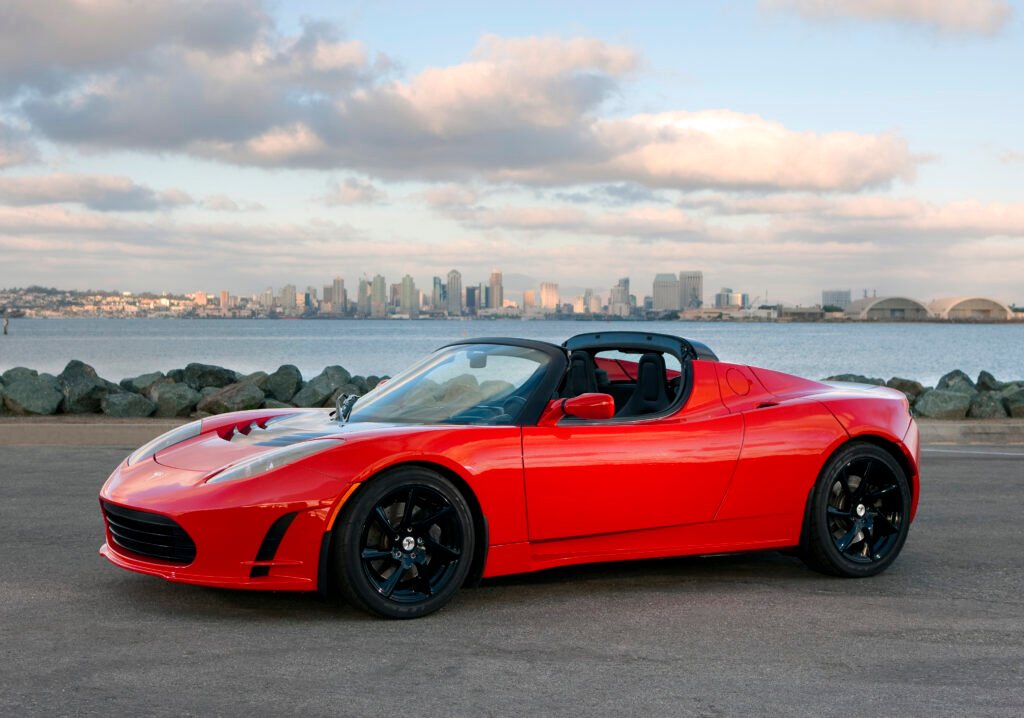
The Tesla Roadster holds a special place in the history of sports electric vehicles. The original Roadster, built between 2008 and 2012, was the car that started the modern conversation about electric performance. It proved that a sports EV could be genuinely desirable. The next-generation Roadster, which has been anticipated for several years, promises to take that legacy and push it far beyond what anyone thought possible.
Tesla has claimed performance figures that, if accurate, would make the new Roadster the quickest production car ever made. A zero-to-sixty time of 1.9 seconds, a zero-to-one-hundred time of 4.2 seconds, and a top speed exceeding 250 mph are the numbers Tesla has put forward. There is also mention of a SpaceX package option that uses cold air thrusters to deliver additional acceleration force. Whether that reaches production or not, the standard car’s specifications are already extraordinary.
The anticipated range of over 600 miles on a single charge would also make it one of the longest-range sports electric vehicles ever offered, which would effectively eliminate the only remaining practical argument against choosing an EV for performance driving.
The design, from what has been shown publicly, is a clean and aggressive two-plus-two convertible that looks unmistakably modern without being theatrical. It is the kind of car that earns attention without needing to shout.
For those who love performance driving and have been waiting to see what the electric era’s definitive sports car looks like, the new Roadster has been positioned as exactly that answer. Reservations have been open for some time, and interest remains extremely high.
Key Specifications (Claimed): Top Speed: Over 250 mph 0 to 60 mph: 1.9 seconds Range: Over 600 miles Price: Starting around $200,000.
What Makes Sports Electric Vehicles Different to Drive

Having spent time around several of these cars, the thing that consistently surprises people who are new to sports electric vehicles is the nature of the acceleration. In a traditional performance car, power builds with engine revs. There is anticipation and drama in the process.
In a sports EV, the torque is simply there. From zero rpm, everything is available immediately. The experience is more intense in some ways and completely different in character. You have to adjust your sense of timing when driving one hard, because the response happens before your brain expects it.
The absence of gear changes also changes how you interact with a sports electric vehicle on a fast road. You focus entirely on braking points, corner entry, and steering. There is a purity to that which some drivers find more engaging, not less.
Charging is the one area where sports electric vehicles still require adjustment in mindset compared to filling a tank with fuel. But with home charging and the growing public charging infrastructure, this is less of a daily concern than it was three or four years ago.
Experts Opinion
Sports electric vehicles have moved past the point of needing to prove themselves. The Porsche Taycan, Tesla Model S Plaid, Rimac Nevera, Lotus Evija, and the upcoming Tesla Roadster each make a genuine case for the electric powertrain as the natural home of high-performance driving.
They are fast, sophisticated, and in many cases more capable than the internal combustion alternatives they sit alongside. More importantly, they are genuinely enjoyable to drive, which is the only standard that ultimately matters for a sports car.
If you have been curious about sports electric vehicles but have held back, the current generation of performance EVs offers more than enough reason to look closer. The experience they deliver is not a compromise. In most cases, it is an upgrade.